Why cabin crew keep asking you to turn off devices on takeoff
You’re settling into your seat, popping in your headphones, maybe scrolling through social media or watching a video, when the captain’s voice comes over the intercom: “Please turn off all electronic devices for takeoff.” And just like that, your screen goes dark.
It happens on nearly every flight, yet a lot of travelers—especially frequent flyers—wonder: do they really need to? Is it just a rule, or is there a legit reason behind it? Let’s dig into why cabin crew keep asking this, what’s changed in recent years, and when it really matters.
1. It’s About Safety, Not Annoyance
First, let’s get this straight: it’s not about making your life harder. The rule exists for safety. Aircraft takeoff and landing are the most critical parts of a flight. Statistically, these phases are when incidents are most likely to occur.
Electronic devices can interfere with aircraft systems, even if the risk is small.
Cabin crew want you attentive during takeoff and landing—if something goes wrong, you need to hear instructions.
So while it feels annoying to pause your playlist, it’s really about making sure everyone’s ready for the critical moments.
2. Devices and Interference: What’s Real?
Back in the early 2000s, regulators worried that personal electronics could interfere with avionics—navigation, communication, and control systems.
Tablets, phones, laptops: emit electromagnetic signals that, theoretically, could affect sensitive aircraft systems.
Modern aircraft: are much better shielded, so the risk is minimal.
That’s why rules have relaxed a bit over the years—but “airplane mode” exists for a reason: it stops wireless signals from interacting with the aircraft’s systems while still letting you use the device offline.
3. Regulations Vary by Country
Not all countries have the exact same rules.
FAA (US): Electronic devices can now be used in airplane mode during all phases of flight.
EASA (Europe): Similar rules, with some restrictions depending on airline policies.
Other regions: Some countries still require devices off completely during takeoff and landing.
Airlines often stick with stricter rules than required—partly for simplicity, partly because it’s easier to enforce compliance.
4. Takeoff and Landing: Why It’s Critical
Even if your phone isn’t affecting the plane, takeoff and landing are high-stress moments:
Pilots and crew need attention – Cabin announcements may contain critical instructions.
Brace positions and safety checks – If an emergency happens, crew need everyone’s full focus.
Loose items can be dangerous – Laptops, tablets, and phones flying around in turbulence or an accident can injure passengers.
So turning off or stowing devices isn’t just about signals—it’s also about preventing physical hazards.
5. Airplane Mode vs Off
Modern rules distinguish between “off” and “airplane mode.”
Airplane mode: stops wireless signals, but device can still play music, watch offline videos, or work on documents.
Off completely: used when regulations or airline policies still require zero electronic activity.
Most airlines now allow devices in airplane mode, which is why you’ll see people still using Kindles or tablets right after the “turn off” instruction.
6. Wi-Fi and In-Flight Connectivity
You might wonder: if planes now have Wi-Fi and cellular connectivity at 35,000 feet, why worry about devices at all?
Wi-Fi systems are designed to integrate with aircraft electronics safely.
The risk of interference is mostly during takeoff and landing when systems are at their most sensitive.
Once at cruising altitude, devices can safely transmit signals through onboard systems.
So yes, you can stream or send messages at 36,000 feet, but during takeoff, best to switch to airplane mode.
7. Cabin Crew Compliance is Non-Negotiable
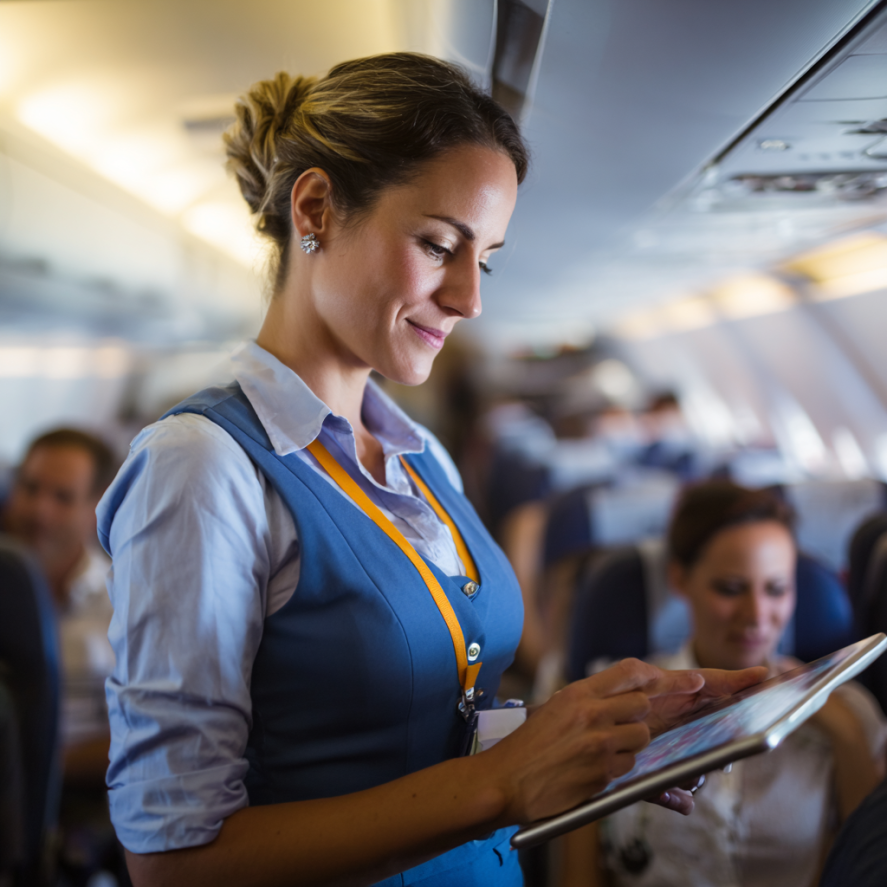
It’s not optional. Cabin crew are trained to enforce rules for everyone’s safety:
Their authority comes from aviation regulations.
Ignoring instructions can result in fines, penalties, or being barred from future flights.
Following rules helps them focus on safety rather than arguing with passengers.
In short: it’s not personal, it’s professional.
8. Small Devices, Big Potential Risk
Even tiny gadgets like smartwatches or wireless earbuds can emit signals. While a single device is unlikely to cause problems, multiple devices combined could, in theory, create interference.
Most modern aircraft are shielded, so real-world risk is low.
Regulations remain conservative—better safe than sorry.
Think of it like wearing a seatbelt: it feels unnecessary sometimes, but rules exist for rare but serious events.
9. Exceptions and Relaxations
Some airlines allow limited device use today:
Reading e-books on Kindle
Playing offline games on a tablet
Using laptops in airplane mode
Medical devices approved by the airline
Still, instructions from cabin crew always take precedence.
10. Myths vs Facts
Let’s clear up common myths:
Myth: Phones can make a plane crash.
Fact: Highly unlikely. Modern aircraft are shielded, but regulations remain cautious.
Myth: Airplane mode is pointless.
Fact: It stops wireless transmissions that could theoretically interfere with sensitive electronics.
Myth: Crew just want control.
Fact: It’s about safety, attention, and preventing injuries from loose devices.
11. How to Make It Less Annoying
You don’t have to hate takeoff just because devices are off.
Load movies, music, or podcasts before boarding.
Use airplane mode to keep entertainment running.
Stash loose items safely in overhead bins or under the seat.
Pay attention to announcements—sometimes they really do matter.
A few minutes offline isn’t a huge sacrifice for safety.
12. Bottom Line
Cabin crew ask you to turn off devices for a mix of reasons:
Safety of the aircraft systems – real, though the risk is smaller today.
Passenger safety – loose devices can injure someone during takeoff or landing.
Attention and compliance – you need to hear instructions in case of emergency.
It’s less about punishment or annoyance, and more about a cautious, safety-first approach that keeps everyone on board protected.
Next time your screen goes dark, remember: it’s a short pause for your safety—and the aircraft’s. You can start scrolling again once the plane reaches cruising altitude.
Flying is full of rules, but most exist to make the journey smoother and safer. Cabin crew reminders about devices are one of those rules that actually do matter.